Two minutes on your phone. Twenty with your kid.
Pabbi is Icelandic for dad. You and your kid hold a button down together, a reel spins, and it lands on one thing to go and do.
No decisions. No planning. And twenty minutes later you both feel more connected than you did.
Here’s the real machine, loaded with twelve generic ones so you can feel how it works. Have a go.
You get one swap, then you’re doing it.
Why I needed this in the first place.
For a couple of years I was doing well at work, and at home I quietly wasn’t. It wasn’t that I didn’t know my kids — I did. It was that whatever came up, there was one parent they turned to, and it wasn’t me. I could feel that gap widening a little every year, and I knew how Cat’s in the Cradle ends. A weeknight went like this.
Through the door
Demanding job, long days, and nothing left at the end of one. My own habits had gone with it — bad sleep, no exercise, work bleeding into the evening.
Dinner cleared
Forty minutes before bedtime routines and this was my window of opportunity. All I could muster was crashing on the couch.
Lights off
Nobody had a bad evening. Nobody had a particularly good one either. Young ones asleep and phone in my hand, I couldn’t tell you where the time went.
Wanting it was never the missing bit.
I wanted one-on-one time with each of them more than anything else on my list. What I didn’t have was a reason to start tonight, an occasion to hang it on, or enough left in me to get over the friction — and that’s for a single evening. Every week, forever, was out of the question.
So whatever fixed it had to decide for me, give the thing an occasion, and be small enough that I couldn’t talk myself out of it.
So I tried jam jars.
It started as jam jars on the windowsill. One per kid, twenty-odd slips in each, every one written for that kid by name, and a couple of big ones folded in with the rest.
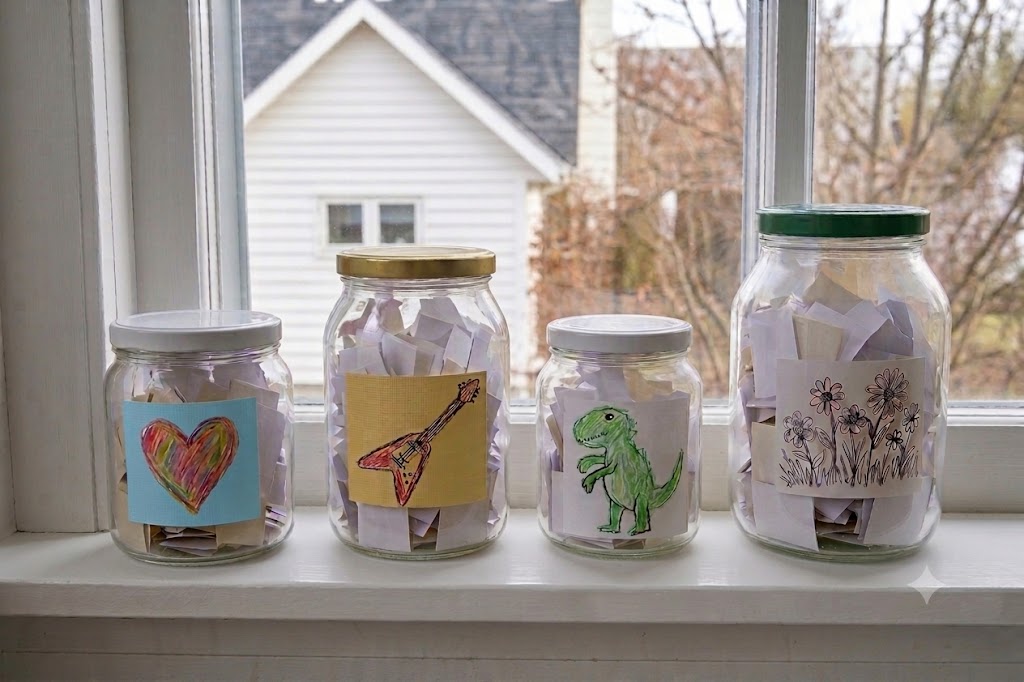
They’d reach in, unfold it and read it out. Then we’d do the thing. That little ceremony was the whole thing, and they loved it. It ran for months.
What killed it was refilling the jars.
Four jars go empty at four different rates. Refilling one means sitting down and coming up with twenty more things for that specific kid, then writing them all out.
You only ever notice a jar is empty at the exact moment you needed it — six o’clock, coat still on, kid already asking. That’s the worst possible time to be handed a blank page.
Pabbi keeps the good part exactly as it was: they reach in, they read it out, off you go. Refilling is now a couple of minutes and almost no thinking — and the suggestions come back tailored, it’s always in your pocket, and what you did together gets kept.
A dad I set this up for, when I asked why he hadn’t already sorted something out himself:
“My wife and I have been talking about wanting to spend more one-on-one time with the kids. We just haven’t gotten around to setting anything up.”
Things I’ve either said myself or read a hundred times in dad forums at midnight:
“I keep meaning to. I’ve been meaning to for about a year.”
“I got home, and then it was bedtime, and I don’t know where the evening went.”
“By the time dinner’s cleared there’s forty minutes left, and I’ve made every decision I’ve got in me for one day.”
“I don’t know if I’m doing a good job.”
Nobody can answer that one for you. What helped me was small evidence: the evenings that actually happened, the fact that it kept going past the first week, and one of them asking for another date when it had only been a couple of days since the last one.
I was never short of ideas. I could give you forty right now and not one of them would have got us off the sofa.
Knowing what to do was never the gap. Somebody still has to pick one, sell it hard enough that the other one’s actually into it, and carry it if it flops — right after work, or right before bed.
That turns the best part of the evening into a hurdle. Pabbi takes that whole job off you.
What it is.
You tell Pabbi what your kid’s into, it suggests, and the two of you keep the good ones. They’ll be pushing for their favourites before you’re finished.
This is the bit that’s for you. Nothing can come up that you haven’t got the time, the energy or the money for — so you can say yes to whatever lands without checking first.
Two thumbs on the button. Neither of you knows which one it’ll be.
Mine ask to have theirs read back to them. That was the part I hadn’t designed.
Neither of you chose it, so neither of you has to defend it.
A fifteen-year-old can’t say yes to her dad’s idea without it becoming her idea too. That’s what she’s dodging when she says no. It was never really about the activity.
When a machine picks, there’s nothing to agree with. She can think the whole thing is ridiculous and come anyway. Mine does — and we always end up having fun.
Why they actually want to.
Build the deck with them, not for them.
Sit down together, tell Pabbi what they’re into, and read the suggestions out. They’ll bin things you’d have sworn they’d love and fight for two you thought were daft.
By the time you’re done they know something good is in there, waiting. They’ll start asking that same evening.
You never know which one, and you always win.
Every card in there is one you both already said yes to, so there’s no bad outcome to brace for. All the suspense, none of the risk. That’s a rare combination and kids feel it immediately.
It looks like an arcade, on purpose.
Lights, a reel, a proper heavy button. A six-year-old wants to press it and so do you. Nobody has ever had to be talked into pulling a lever.
It lands on a big one.
A big one gets drawn and then the two of you decide what it is — the zoo, the match, or an ice cream and the long way home. Same as the prize slips in the jar: drawn, never earned, never bought. They know it’s in there. So do you.
You end the evening having done something, instead of having meant to.
Twenty minutes, closed off, written down. It’s a small hit of having got it right, and it lands every single time because the bar was twenty minutes.
Which is why it keeps happening. Most habits that start with picking up your phone go the other way.
Who it’s for.
Three to twelve is where I built it, and it holds into the teens. Under three I’d wait.
A twenty-minute plan and a sentence afterwards both need a kid who can hold up their end. I’d rather say that than take the money if it’s not a good fit. And if you’re still here, odds are it’s for you or another parent you know.
Built by us, for us.
My daughter came through the door today and the first thing she said was “Dad, are we having a date today?”
Not asking to go on the console. Not asking for the telly. That’s the ask now, and she’d had one two days ago.
And for me, saying yes is not a problem. It’s twenty minutes and I don’t have to think of anything. The bit I didn’t expect is that I’m as curious as she is about what it’s going to land on.

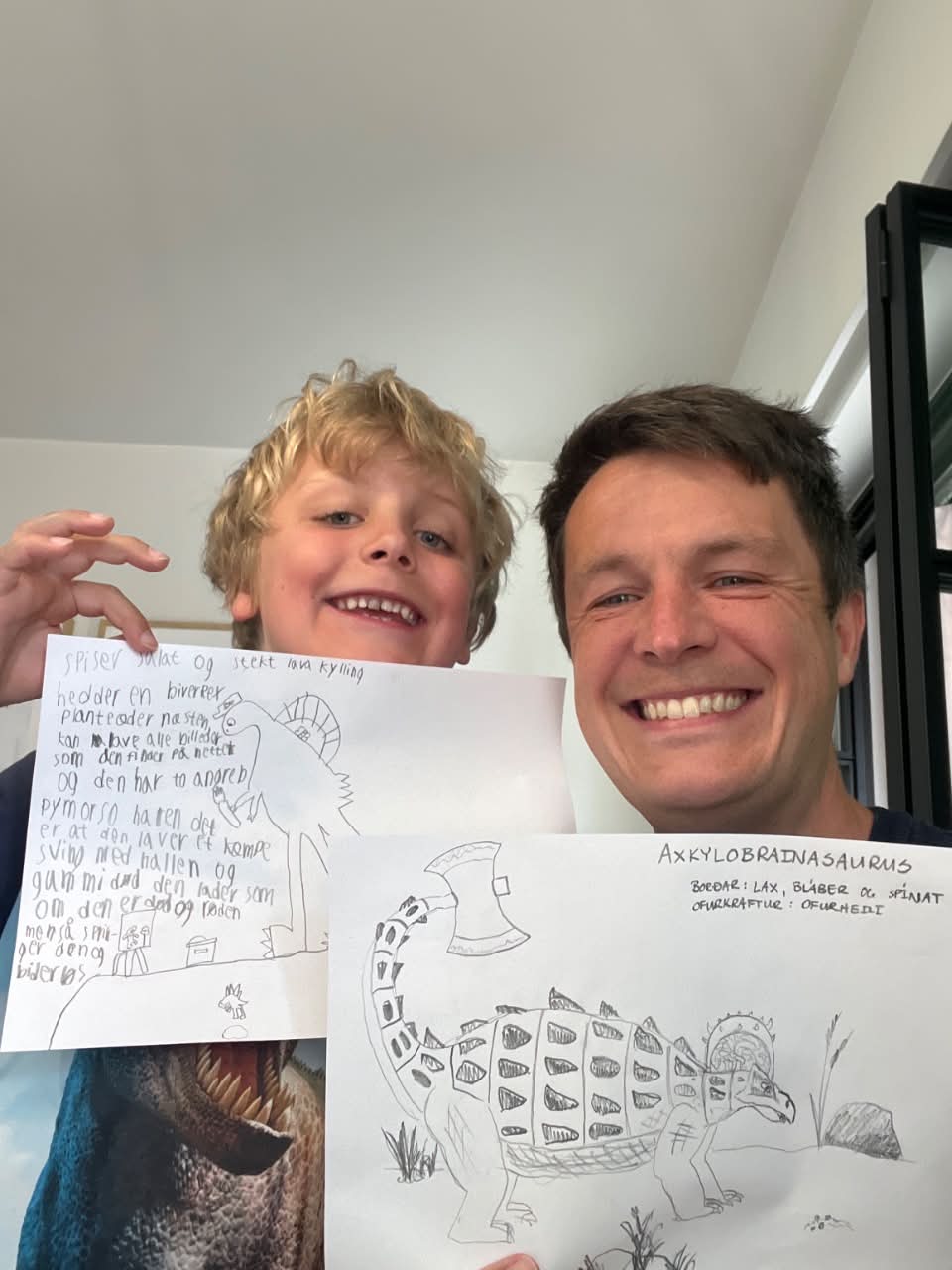
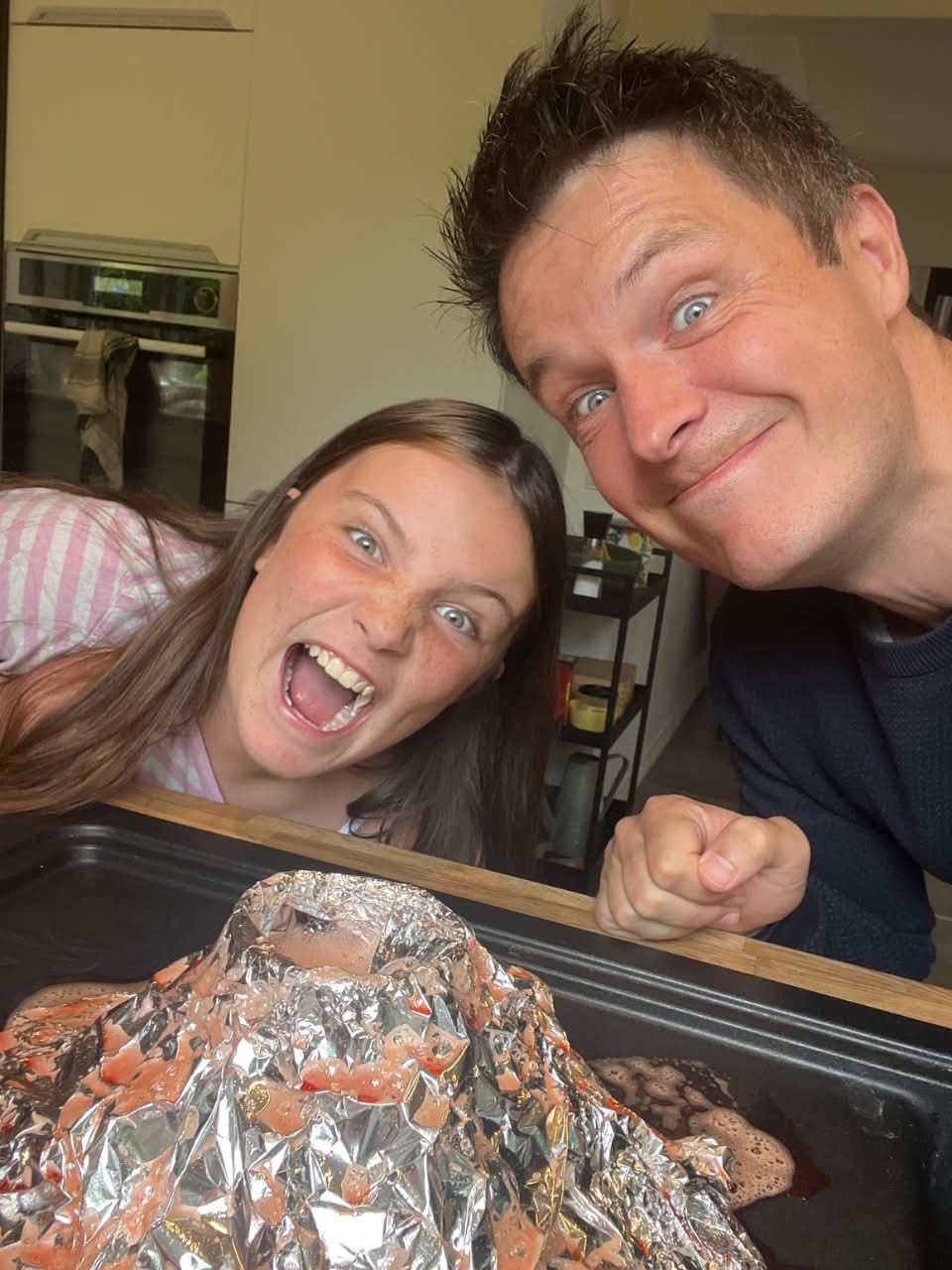
“The axe on the Axkylobrainasaurus, or the Biverrex’s playing-dead attack.”
“What was the best bit? The giraffe?”
“No! Being together with you.”
“If you hadn’t held me back I would have crashed into that building and destroyed it.”
Empty. Nobody outside my house has used it long enough to have an opinion worth printing.
Have a proper go tonight. On the house.
Tell it three things and it spins you a whole plan for tonight: the sentence to open with, and three things to do.
A proper go at the real thing, on the house. No account, no email, nothing to install — and it stays free. The only thing it hasn’t got is your kid in it.
You made one happen.
That was the generic one. The real one sits in your pocket, two taps away whenever you’ve got twenty minutes — and it knows what your kids are into, whose turn it is, and what they said last time.
Make this your family’s thingNow imagine that, but built especially around you and your kid.
That one was written for any kid that age. Here’s what turns up when it’s written for yours.
A deck that sounds like your kid.
Sharks this month, something else by Christmas. She sat next to you and threw out the ones she didn’t fancy, which is why she turns up for the rest.
It knows who’s due.
The undemanding one is the one who can go three weeks without anybody noticing. You stop having to hold that in your head, and nobody has to work out whether it’s fair.
The bit you’ll want in ten years.
One photo and one line in their words, forty seconds in the hall. Tonight’s plan gave you the evening. This gives you the evening back, years later, in their own handwriting more or less.
The free one starts from nothing every time. Pabbi grows into your family.
And more to come
It gets built in my own house first, so it keeps arriving.
All of it pointed at one thing: more real time with your kids, and you knowing you’re making a proper go of the dad job.
Seven promises about your family’s data and your kids.
Anything pointed at a child is worth being careful with. These are fixed.
No streak a child can break.
The run of weeks belongs to the whole family. Anyone’s twenty minutes keeps it alive, so no child can break it and no child can be behind on it. Miss a week and it goes to zero, quietly. Your longest run ever stays where it is, because that happened.
No comparing kids.
If you’ve got more than one, they never see each other’s pages and the app never ranks them.
The badges only ever add up.
There are some. One fires on your first finished date, with a daft little fanfare, and the kids like them more than I expected. None of them can be lost, expire or be taken back.
Nothing sold, shared or trained on.
Not to advertisers, not to data brokers, and never to train a model. Your whole family’s history comes out as one file whenever you ask for it.
What I can actually see.
Counts, and nothing else: how many dates, how long they ran, whether setup finished. I don’t read your kids’ sentences and I don’t open your photos.
It’s on a server, and that’s deliberate.
In Europe, not on your phone — which is how it’s there on your other phone, and how a lost handset doesn’t take four memory books with it. Anyone who tells you their keepsake app keeps everything on-device is describing a way to lose it.
If I ever shut it down.
You’ll be told in advance, and you’ll get everything out in one file that opens without me.
What it costs.
Whole family, however many kids. Your first three mini-dates are free, and the machine further up stays free whatever you decide.
First 200 families: your price never goes up.
I can raise it for people who arrive later. I can’t raise yours. If it ever comes down, you come down with it.
Your memory books stay yours if you stop paying.
Readable, exportable, one file, free, for good. That one’s standing policy, not an offer, and it has no date on it.
That’s less than two happy meals, or two cups of coffee.
Nearly all the activities are free. The ones that aren’t, you decide whether they go in at all.
You’re paying to have every obstacle between you and your kid removed: the right idea, at the right moment, in a form you can act on.
Feeling properly connected, the lift that comes with that, and the two of you doing something new together every week. That’s the trade.
Two ways to spend the same eight dollars.
Ten minutes at the counter, and then it’s gone.
Two weeks to change your mind.
Do one date with your kid — that’s the whole ask, and it’s how you’ll know. If you’d still rather not have it, email me any time in the first two weeks and I’ll send it all back. No form, and I won’t ask why.
I’m Binni. Icelandic, living in Copenhagen with my Danish wife and our four kids.
I didn’t build this to sell it. The jars stopped, we all missed them, and I wanted the version that couldn’t stop. It ran in my own house for months before it had a name on it.

What it’s given us: I spend meaningful time with each of them individually every week, which never used to be true. They ask me for it. And the four of them get roughly the same amount of me without anybody keeping score — the thing I’d been quietly failing at for years.
What it’s given me is harder to say out loud. I feel better about myself as a father. The days come lighter, I’m off the hamster wheel, and I’m on my phone less in the evenings, because there’s something better to do with the time.
And I’ve got a record of it. Turns out we do far more together than I’d have told you we did. The jars were good; they like Pabbi more.
Get your place.
Leave your address and I’ll be in touch when we launch.
That’s you in. I’ll be in touch when we launch — and nothing else in the meantime.
There’s a note on its way to say hello. If it doesn’t turn up, have a look in the spam folder — better to know now than on the day it matters.
Nothing else to do here.
Straight answers
How do I get in?
One email from me with a link and a code. It’s a web app you add to your home screen, so there’s nothing to download and it isn’t in either app store.
Does my child need an account?
Not at the moment. They use your phone, and there’s nothing for them to log into. If that ever changes it’ll be to help create more time together and better memories, and nothing else.
What happens after I put my address in?
You’re on the list straight away. I’ll send one note to say hello, and after that nothing until we launch — plus the occasional update about Pabbi. Every one has an unsubscribe link that works immediately.
Who writes the activities?
A language model does the suggesting at setup, working from what you typed and your child’s first name so the cards use it. You two decide what stays. It tops the deck up as you go, and you can add your own any time.
Do the activities cost money?
Mostly not. They’re built around what you already own, at home or five minutes’ walk. A few will want a couple of quid out of the corner shop. Big days out cost what a day out costs, and you’re the one who puts those in.
What if I skip three weeks?
You open it and your cards and your books are exactly as you left them. The run of weeks will have gone back to zero. Your longest run is still recorded, and there’s nothing to catch up on.
What language is it in?
English for now. More later, starting with the two spoken in my house.
What if I want my money back?
Email me inside two weeks of paying and I’ll refund the full amount — the year or the month, whichever you paid. It ends there and then; your memory book stays yours, same as if you’d simply stopped. If you come back later you pay whatever it costs then.
Can I just email you?
Yes. olafssonprime@gmail.com reaches me, and it’s me who answers.